Rule 1 | Work with Line Bundles
Lesson 3 | The contour is not the beginning of the drawing
30 min.
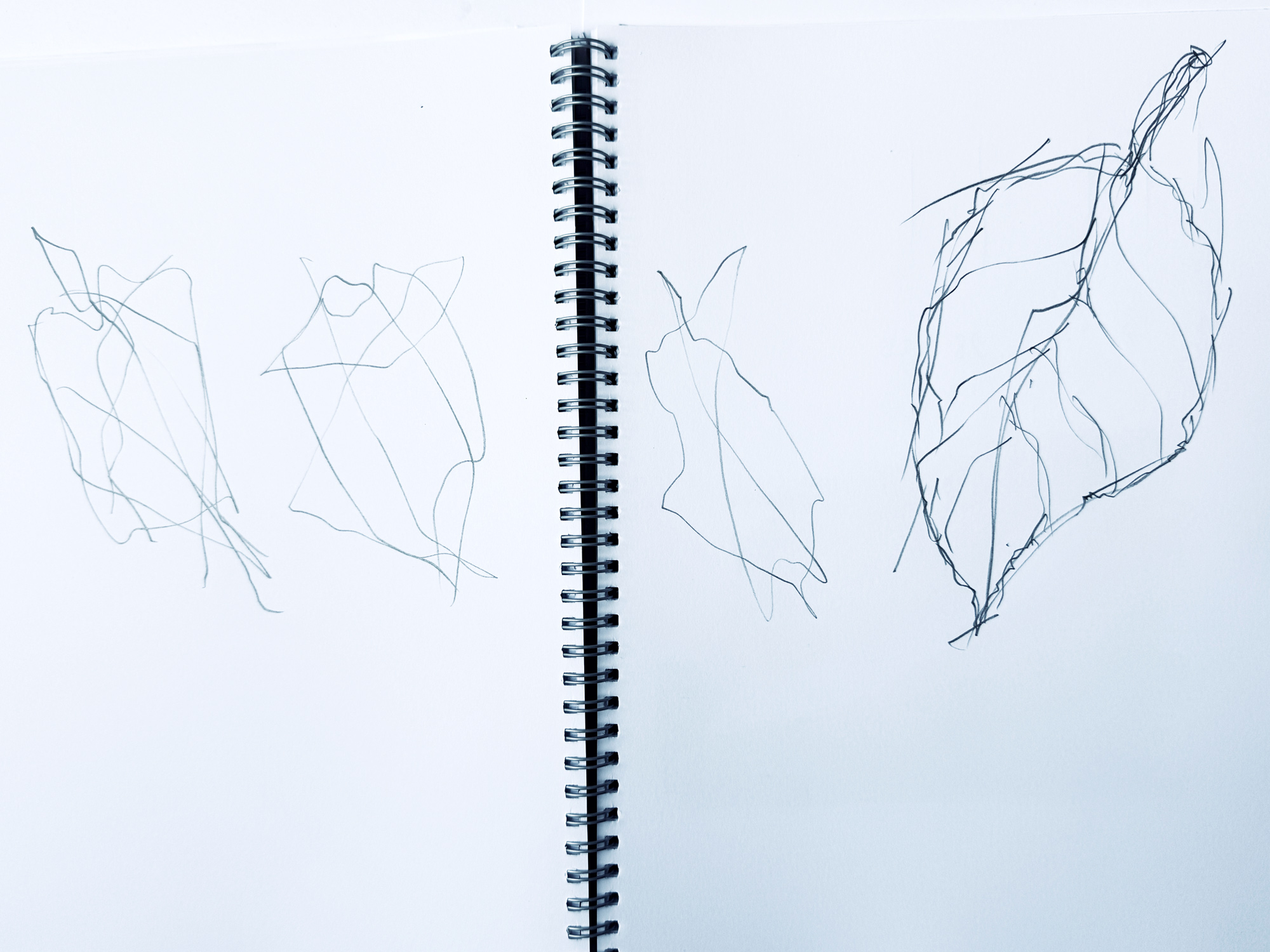
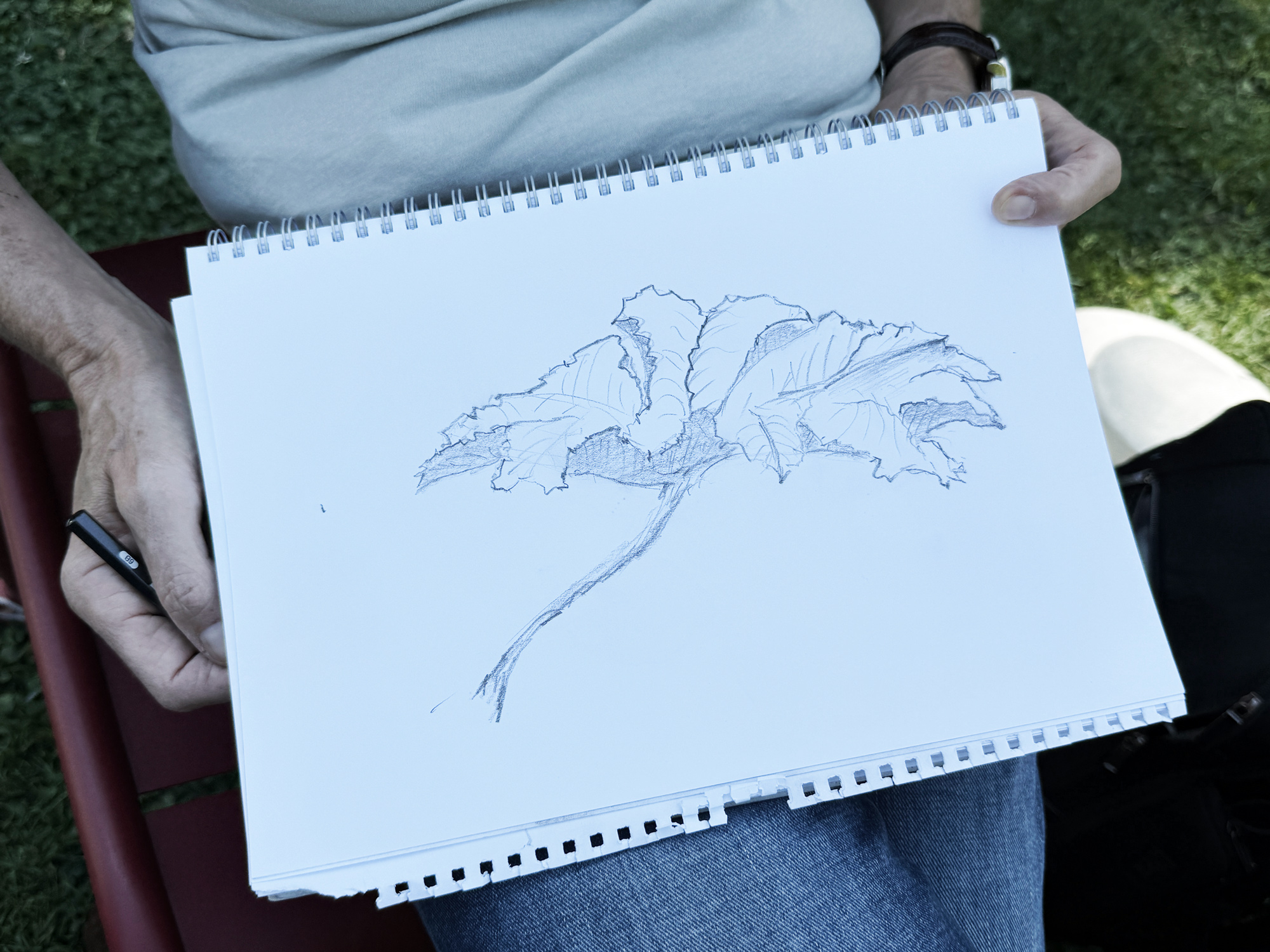
In this lesson, you learn how to find the form of a leaf with crossing lines. Instead of starting with the outline, you build a field of searching lines. Through this visual noise, the structure of the leaf slowly becomes visible.
Watch and see - A leaf is not only an outline
It has tension.
It has a middle line.
It has side veins.
It bends, folds and changes its shape.
To draw a leaf, you first have to find its form.
Crossing lines help you do this.
They create a field of visual noise.
Inside this field, the form begins to appear.
Step 1 | Look for the main direction
Place one leaf in front of you.
Do not draw immediately.
Look at the movement of the leaf.
Does it stretch upwards?
Does it bend to one side?
Does it curl?
Does it open like a hand?
Does it hang down?
Draw this first movement with a light line.
Step 2 | Cross the form
Now draw light lines across the leaf.
Let them go from edge to edge.
Let them cross the middle line.
Let them follow the direction of the veins.
These lines help you understand the structure.
They are not decoration.
They are thinking lines.
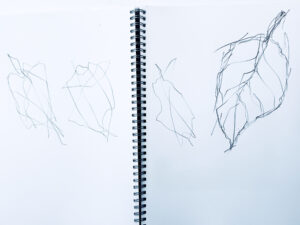
Find the form with crossing all over the form.
Step 3 | Let the leaf appear
Continue with more crossing lines.
Some lines will feel right.
Some lines will feel wrong.
Both are useful.
The wrong lines help you see the right ones more clearly.
This is how the form appears.
Step 4 | Find the contour later
Only now begin to look at the outer edge.
Do not close the outline too quickly.
Let the contour grow out of the inner structure.
A good contour is not a border.
It is the visible result of the form you have found.
Step 5 | Highlight the found lines
When the form becomes clearer, choose some lines.
Press a little harder.
Highlight:
the middle direction
the strongest side veins
the turning points
the bends
the folded edges
the places where the leaf changes direction
The drawing becomes readable through these accents.
Step 6 | Leave search lines visible
Do not erase all search lines.
They show how the form was found.
A sketch is allowed to show the process of thinking.
The crossing lines keep the drawing alive.
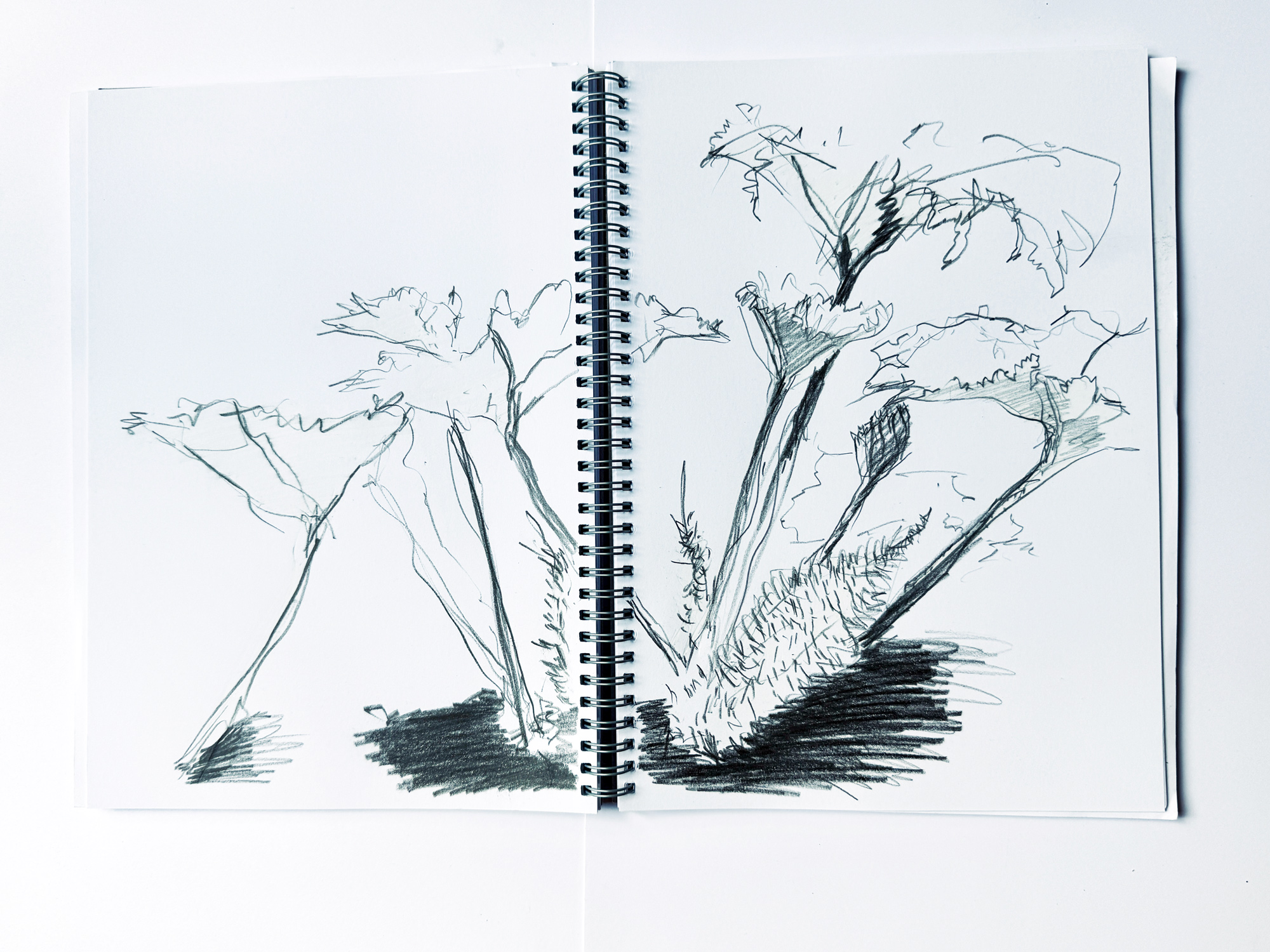
Crossing lines are useful when the form is still unclear
They allow your pencil to move across the object.
They help your eye compare directions.
They make the drawing more open.
A crossing line is not a mistake.
It is a search line.
It asks:
Where does the leaf turn?
Where does it open?
Where does it fold?
Where does the form begin to become visible?
Do not start with the contour
Many beginners start by drawing the outside edge of the leaf.
But the contour is often the last thing you really understand.
Start inside the leaf.
Find the middle direction.
Find the side directions.
Find the rhythm of the veins.
Let lines cross the form.
The leaf will slowly become visible.
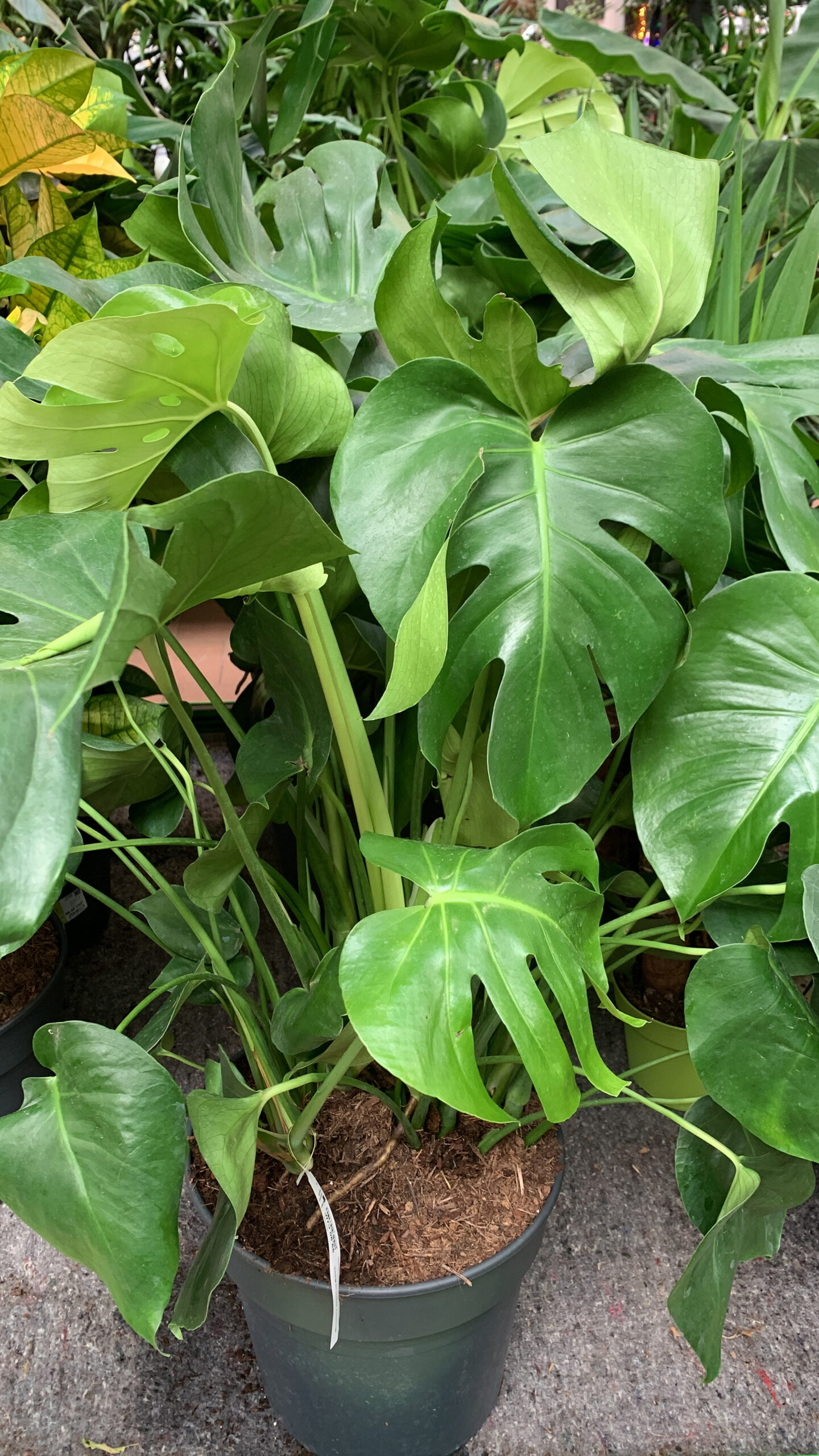
Take one of these pictures or go to your garden and find a real leaf.
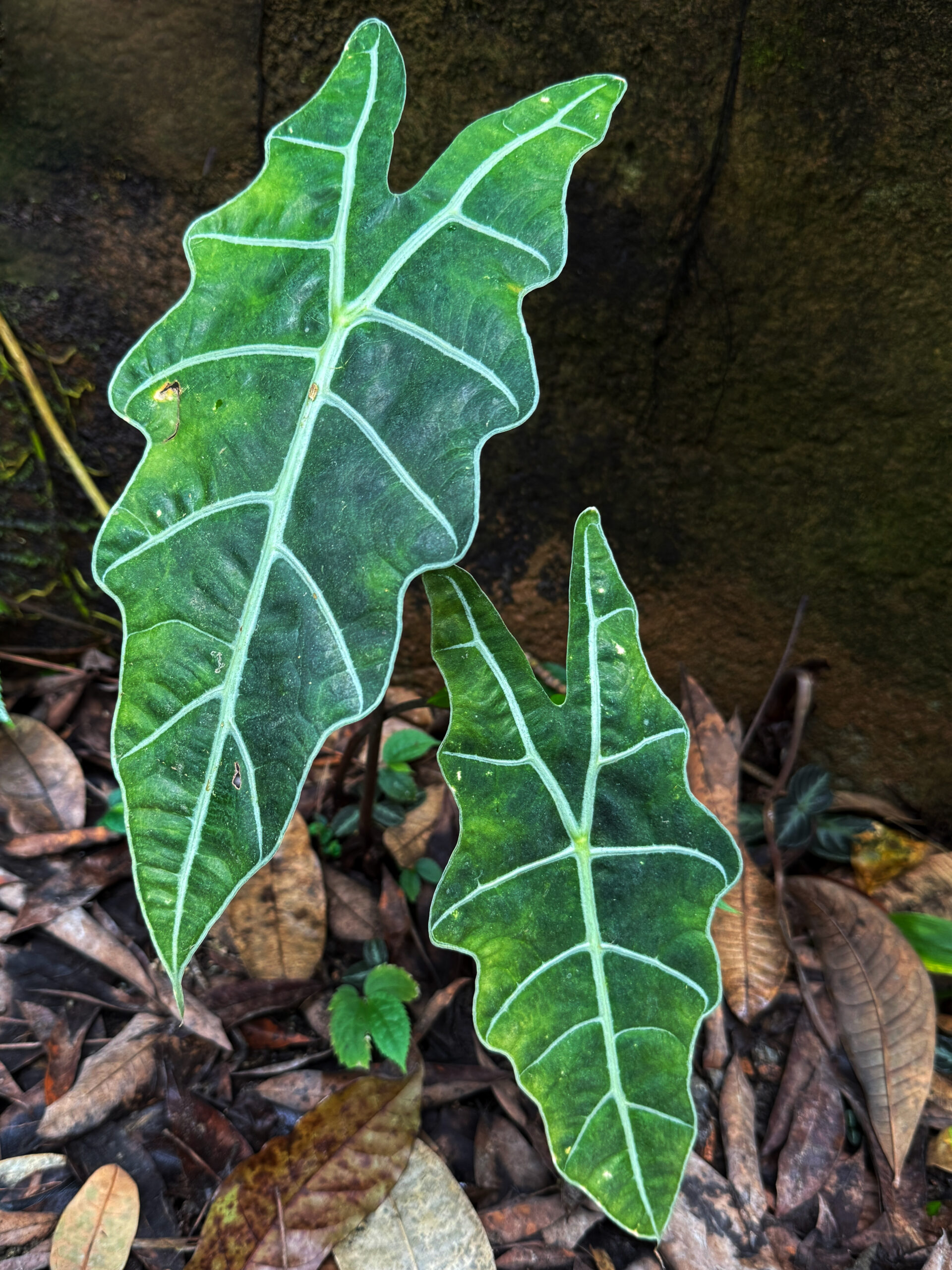
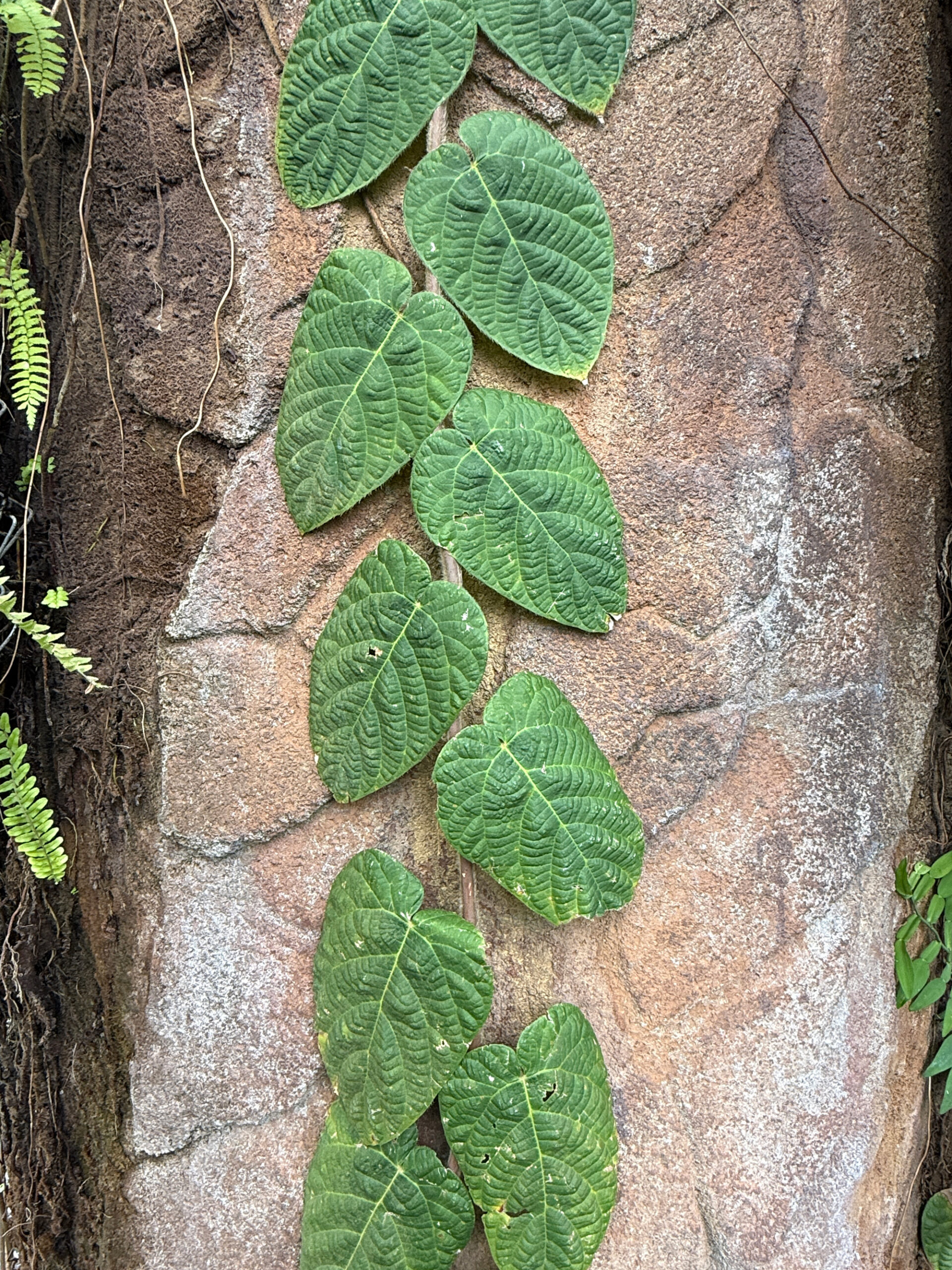
ASSIGNMENT | Make your exercise sheet and upload it
Choose three different leaves. Draw each leaf with crossing lines. Do not begin with the outline.
For each leaf:
Find the main direction.
Draw crossing lines through the form.
Let the inner structure appear.
Add the contour only at the end.
Highlight the lines that make the form readable.
Upload a photo of your three sketches. The crossing lines should still be visible.
Then press the button completed. And head over to your writing is your style
30 min. |
After having uploaded your work, press Click to complete going to the next lesson.
[wpc_button text=”Click me to complete!” completed_text=”Completed”]
free trial
Get free feedback on one lesson and then decide if you want to do the whole course. Click here for the free trial ...

get your certificate
If you want to achieve a certificate that proofs your sketching skills for teaching, get all your information here.